Key takeaway
A stuck key or a car that will not start can have several causes. A diagnosis can determine whether the ignition switch needs repair.
Repair ignition switch on site in Laval: what happens when you turn the key
When you turn the key and nothing happens, the culprit is not always the battery: it is often the ignition switch, which transmits the starter current to the engine.
The ignition switch is the electric relay located behind the barrel of your key. It connects the rotation of the key to the vital circuits: starter, fuel pump, ignition and accessories.
Each key position activates a different circuit: in the running position, the ignition switch powers the ignition; in the starting position, it sends the current to the starter.
Car key blocked in contact: why the key refuses to turn
A car key blocked in the contact rarely comes from the ignition switch: it is most often the lock of the barrel, the locked steering wheel or a used key.
Frequent causes of a blocked key:
- The steering wheel is locked and exerts pressure on the mechanism
- Key is used or twisted
- The barrel is crushed or the cups are worn
For the locked steering wheel, gently turn the steering wheel on one side and the other while turning the key. If nothing moves, do not insist: forcing the key can break in the barrel. An auto locksmith intervenes on the spot to release the mechanism without damaging it.
Diagnostic car that does not start: battery, starter or ignition switch?
The car diagnosis that does not start always follows the same order: battery, starter, and then ignition switch. This sequence avoids replacing an expensive part when the problem comes from elsewhere.
Step 1, Does the engine turn, yes or no?
This question separates two families of breakdowns.
- The engine runs but does not start: the starter is running, so the ignition switch is properly powered by the circuit. The problem is elsewhere, ignition, fuel, sensor.
- The engine does not turn at all: the starter does not receive the order to turn. The battery chain → fuse → relay → ignition switch → starter is involved.
Step 2, Does the battery provide enough power?
Before accusing a room, check the power supply. A low battery perfectly imitates a defective ignition switch.
- Do the headlights turn on normally, engine off? If so, the battery probably holds.
- Do they make it hard when you turn the key? Low or poor battery mass.
- Are the terminals clean and tight? A loose terminal cuts the current under load.
Low battery: Overflight is often enough. Otherwise, proceed to the next step.
Step 3, What noise do you hear when you turn the key?
Noise is the best indicator to separate starter and ignition switch.
| What you hear | Probable cause | Where to watch |
|---|---|---|
| One click, then nothing | Starter or solenoid relays | Relays, starter connections |
| A series of quick clicks | Low or poor mass battery | Battery, cables, terminals |
| Total silence | ignition switch, fuse or non-start switch | Fusible, ignition switch, safety light |
| Grinding or friction | Starter engaged but worn | Starter himself |
| Normal start but engine stalls | Power cutting accessories | ignition switch, ignition circuit |
A single click without rotation oriented to the relay or solenoid; a total silence with good battery, to the ignition switch, a fuse or the immobilizer.
Step 4, Does the key rotate with normal resistance?
The sensation in the hand distinguishes a mechanical problem from an electrical one.
- The key does not turn at all: mechanical problem, barrel, locked steering wheel, used key.
- The key rotates too freely, without clicking: the ignition switch no longer engages. Direct sign of internal wear.
- The key is turning normally but nothing happens: the ignition switch is engaged but no longer transmits the current. Internal contact burned or worn.
Step 5, Is the problem intermittent?
A vehicle that starts in the morning and refuses in the evening, or only in certain key positions, has an intermittent failure: almost always a worn internal contact or a loose connector that loses contact under vibration. Hence our test of the laden circuit: at rest, a multimeter can display a normal voltage while the connection fails under a real current.
Step 6, Does the safety light flash?
If the immobilizer indicator flashes or remains on when you turn the key, the vehicle refuses to start by protection: the key is not recognized or the transponder is defective. Replace the ignition switch does not regulate anything.
If the ignition switch remains the primary suspect after these six steps, a mobile technician confirms the on-site diagnosis with a multimeter and a load test, without towing.
Inspection of fuses, wiring and electrical circuit
The electric circuit inspection begins with the fuses: a grilled fuse shuts off the starter power supply and perfectly imitates a switch failure. The starter circuit consists of several elements in series, and a failure anywhere produces the same symptom: nothing happens.
| Element | Role | Failure sign |
|---|---|---|
| Starter fuse | Protects the circuit | Grilled, no power |
| Cable and connectors | Transmits the current | Undressed yarn, corrosion |
| Starter relays | Amplify signal | Click without rotation |
| ignition switch | Distribute the current | Rotation without effect |
| immobilizer | Check the key | Flashing |
Corroded wiring or loose connector causes intermittent cuts that are difficult to reproduce, hence our load test rather than shutdown.
Ignition switch replacement: how it goes on site
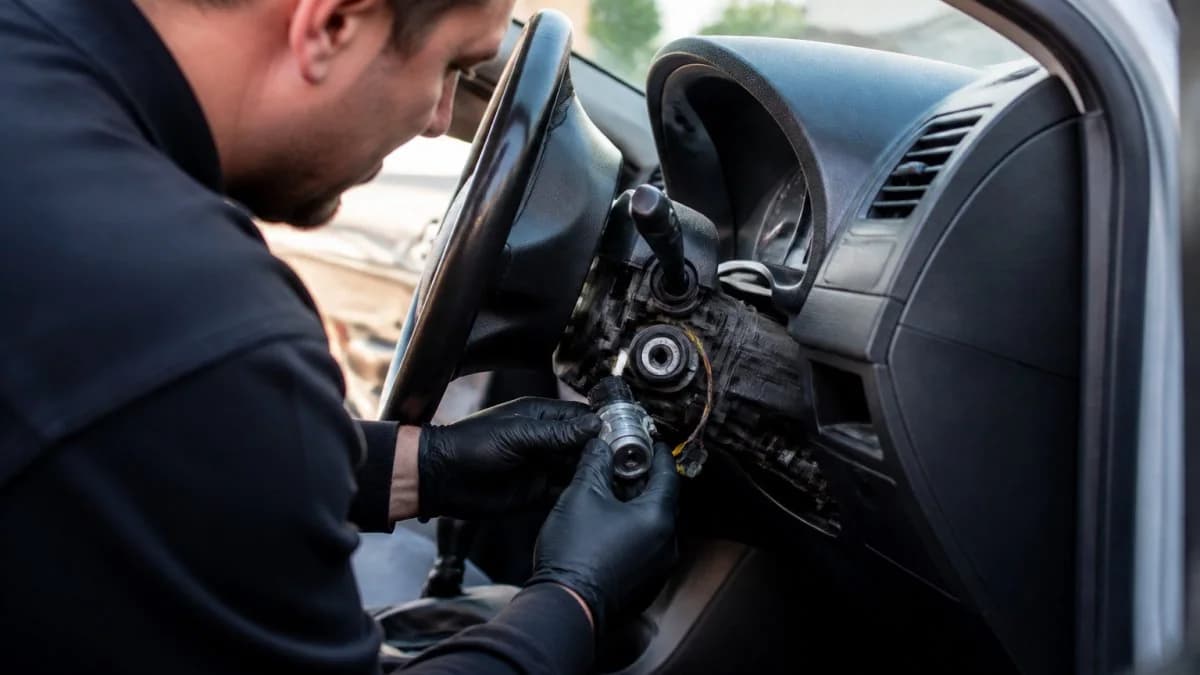
The on-site ignition switch replacement takes place without towing: we access the steering column, retract the caches, disconnect the connector, and then remove the part compatible with your vehicle.
Call us! →
Repair or replace: how to slice
The choice between repair and replacement depends on the ignition switch state: a cracked contact may be cleaned, a burnt or melted contact should be replaced. Three criteria are:
- Visible usury: Burned or melted plastic contacts = mandatory replacement
- Part availability: parts compatible for most brands
- Age of vehicle: on an old ignition switch, repair a weak point leaves others ready to let go
Repairing a worn ignition switch to save a few dollars often postpones the breakdown by a few weeks: we recommend replacing it when the wear is advanced.
immobilizer and vehicle compatibility
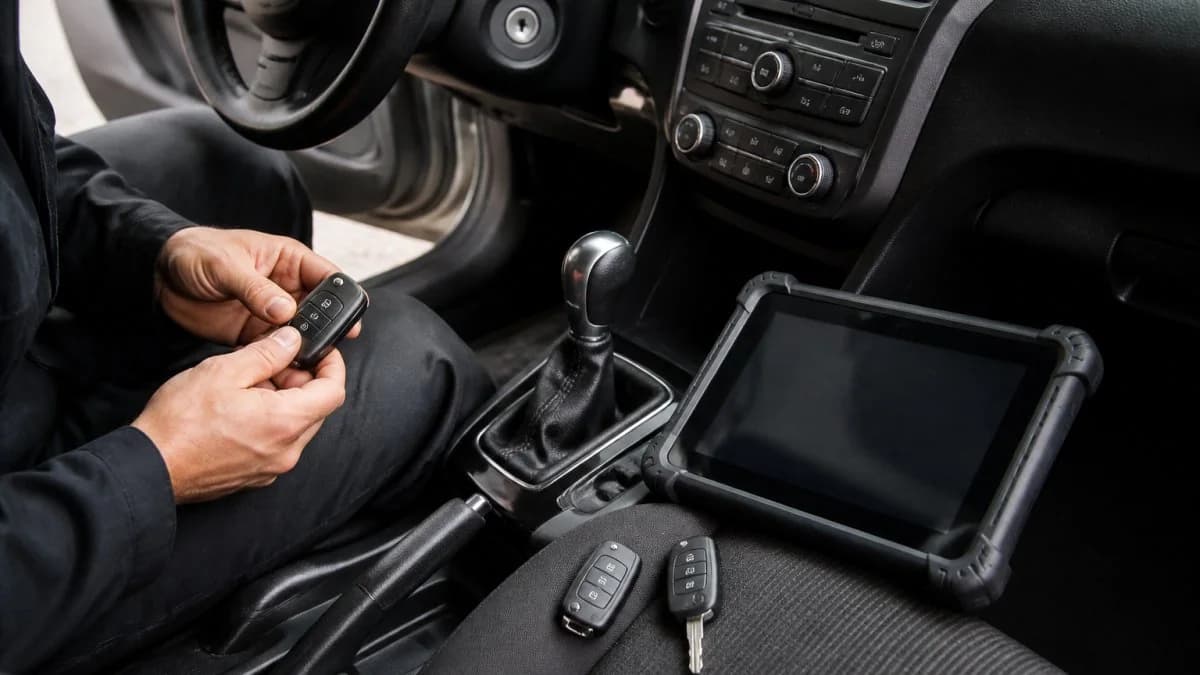
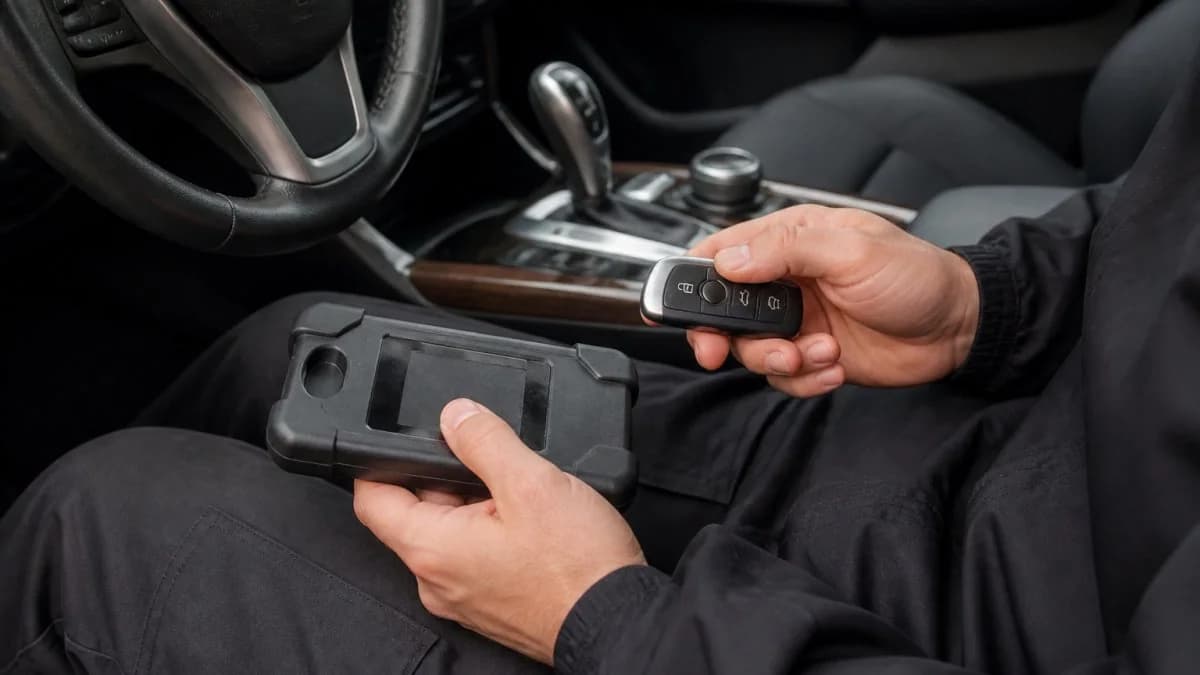
The immobilizering makes it difficult to replace on new vehicles: the new part must be recognized by the computer, otherwise the engine refuses to start even with a new ignition switch, which requires a diagnostic tool adapted to your brand. High-end vehicles like BMW or Mercedes use more complex systems, with programming linked to the chassis number.
Price repair ignition switch: which makes the invoice vary
The price repair ignition switch depends on several factors, not a single rate: access complexity, room type and programming required. We set a price before starting, no surprise at the end.
How the invoice breaks down
An on-site intervention consists of three distinct blocks, to be known for comparing submissions.
- Diagnosis: displacement, circuit under load test, identification of the part in question. This is why you avoid replacing an ignition switch when the problem comes from a fuse or relay.
- The part: original or compatible new ignition switch, depending on the brand and availability. The price varies greatly from model to model.
- The workforce: access to the column, drop caches, disconnect connector, install, then program if the vehicle has an electronic immobilizer.
On a vehicle without complex immobilizer, the intervention is faster; on a recent model with programming linked to the chassis number, count more time.
Which makes the bill go up
- The vehicle model: complex immobilizers take longer and sometimes a brand-specific tool.
- The type of part: an original part costs more than a compatible part, but it is sometimes the only one recognized by the computer.
- Access to the column: some dashboards require further dismantling, which increases the workforce.
What doesn't influence the bill
Some elements should never vary the price of a standard intervention.
- The time of the call: a breakdown in the evening or the weekend does not change the basic rate announced.
- The exact location: parking, residential or commercial street require the same work.
- The number of keys tested: testing an alternative key to rule out a transponder problem is part of the diagnosis.
How to get an exact price
An exact price depends on three informations that you can only provide:
- The vehicle's make, model and year determines the type of ignition switch and the presence of a complex immobilizer.
- The exact symptoms, click, silence, key that rotates freely, safety light on. These details guide the diagnosis.
- The vehicle location, to confirm that the movement is covered without charge.
With this three information, we confirm the rate and the delay before we move. The advertised price is the price charged: if the diagnosis reveals another cause, we tell you before proceeding.
For a price tailored to your vehicle, contact us with the brand, model and year. We confirm the price and the delay before we travel.
Safety and conduct in the event of failure
A switch failure creates a dangerous situation: the engine can set in motion and the power steering becomes heavy. The priority is to get you safe, not force the start.
What to do in case of failure:
- Turn on your emergency lights and stand out of traffic
- Press the parking brake and stay in a lighted place if possible
- Do not try to restart by insisting: this can empty the battery or damage the starter
- Note the exact symptoms for the technician: click, silence, lights lit or not
- Call a mobile service instead of towing your vehicle
If the engine holds while rolling, the steering and brakes lose their assistance. Keep control and let the vehicle slow down gradually. Never cut the contact in motion.
Conclusion: leave with a reliable ignition switch, without towing
A switch failure does not have to end up in expensive towing. At Maître des Clés, we diagnose and repair directly to your vehicle, in Laval and in the region, thus avoiding waiting at the garage and the cost of unnecessary travel.
Call us with the brand, model and year of your car. We confirm the price and the delay before we move, and we will fix the breakdown the same day when possible.
Common Issues
What are the signs of a defective ignition switch?
A key that turns in the vacuum, a silent starter despite a charged battery, accessories that turn off alone or an engine that refuses to stop when you switch off the contact. If the car key is blocked in the contact or if nothing happens when turning the key, the ignition switch is often involved. A car diagnosis that does not start allows to confirm before replacing the part.
Can a ignition switch be repaired directly on site in Laval?
Yes, in most cases. Replacement of ignition switch is done on the parking lot, on the street or at work, without towing. The technician accesses the ignition switch behind the steering wheel, disconnects the battery, removes the module and installs the compatible part with your vehicle. An on-site diagnosis confirms the feasibility of the operation.
How long does repair of a ignition switch take?
The duration of an intervention depends on the access to the ignition switch and the availability of the part. Models with complex steering column or integrated antistart can take longer. If you are stuck, specify it on the phone: a mobile service can often occur the same day in Laval and the surrounding area.
How is the price of a ignition switch repair fixed?
The repair price of ignition switch depends on the make and model, the type of ignition switch (mechanical or electronic with immobilizer), the cost of the part and the displacement. A clear estimate is provided before the intervention, without surprise. As the rates vary depending on the vehicle, call us with the brand, model and year of your vehicle to obtain a precise estimate.
Call us!